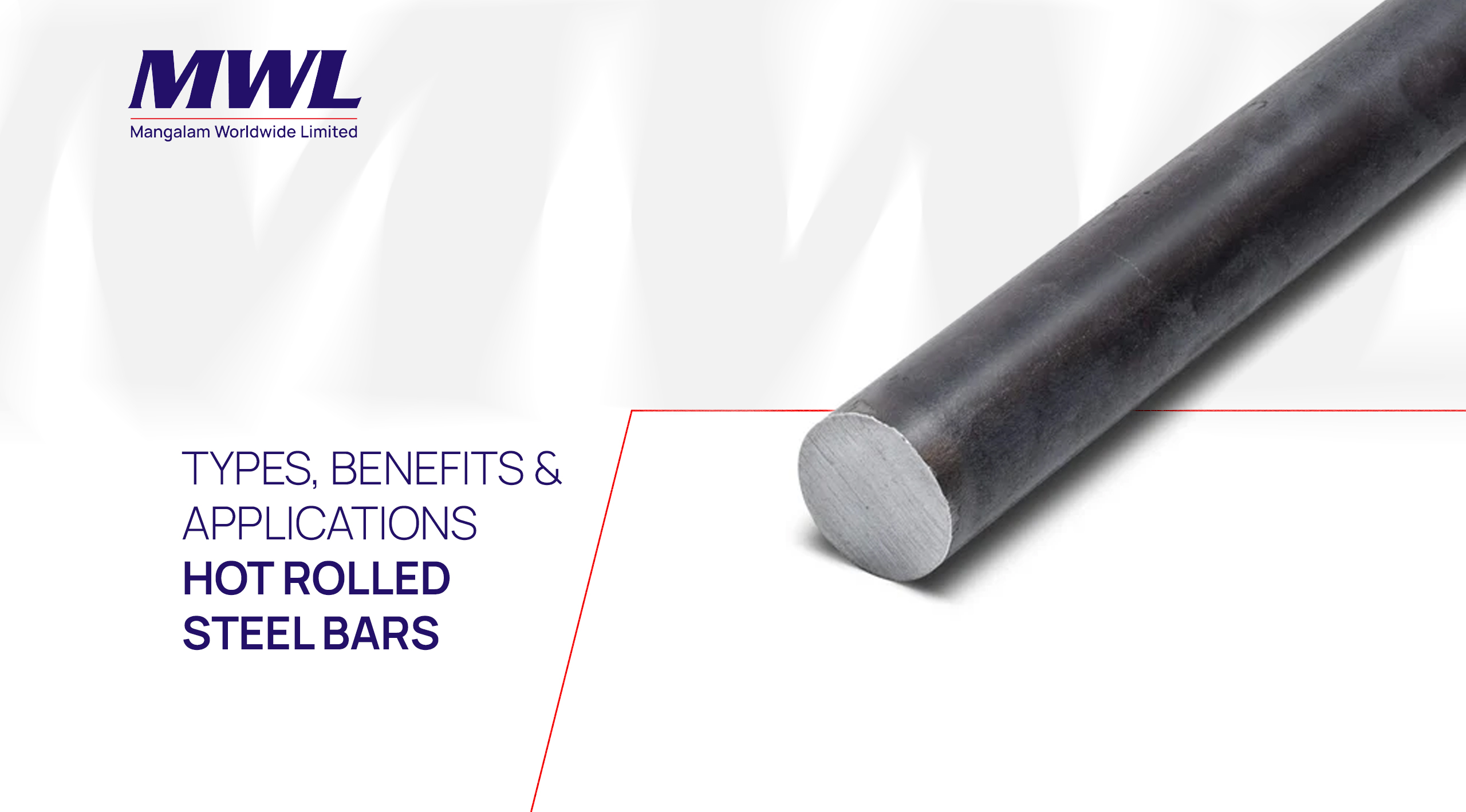
Steel bars form the backbone of countless industrial structures and mechanical systems. Among the many forms of steel products used across engineering sectors, hot rolled steel bars are widely recognized for their structural strength, manufacturing efficiency, and versatility in fabrication. Produced through high-temperature rolling processes, these bars provide dependable mechanical performance for applications that demand durability and load-bearing capacity.
Industries ranging from construction and heavy machinery to automotive and energy rely on hot rolled steel bars for components that must perform under mechanical stress and challenging operating environments. Understanding their manufacturing process, available types, and practical benefits helps engineers and buyers choose materials that meet operational requirements.
What Are Hot Rolled Stainless Steel Bars?
Hot rolled steel bars are produced by heating steel billets to high temperatures – typically above the material’s recrystallization point and passing them through rolling mills to reduce their cross-section and shape them into bars. The elevated temperature allows the steel to deform easily without compromising its structural integrity.
During the hot rolling process, the steel is shaped into various profiles while maintaining internal grain refinement. Once the desired dimensions are achieved, the bars are cooled under controlled conditions to preserve their mechanical properties.
This process allows hot rolled steel bar manufacturers to produce steel bars efficiently in a wide range of sizes and shapes suitable for industrial use.
Types of Hot Rolled Stainless Steel Bars
Different industries require steel bars in specific shapes depending on their intended use. Hot rolled steel bars are available in several common forms, each suited for particular engineering applications.
1. Round Bars
Round bars are among the most widely produced hot rolled steel products. Their circular cross-section makes them suitable for machining and load-bearing components.
Typical uses include:
- Shafts and axles
- Fasteners and bolts
- Industrial equipment parts
- Structural supports
Round bars are commonly used in manufacturing environments where components require further machining or forming.
2. Square Bars
Square bars feature four equal sides and provide excellent stability for structural applications. Their shape allows for strong mechanical support and easier welding during fabrication.
Applications include:
- Construction frameworks
- Fabricated machinery parts
- Structural supports in industrial installations
These bars are often selected where strength and simple geometry are important design considerations.
3. Hexagonal Bars
Hex bars offer advantages in machining and fastening systems. Their six-sided profile allows tools to grip the surface easily during processing.
Industries using hex bars include:
- Automotive manufacturing
- Fastener production
- Mechanical engineering
Hexagonal bars are commonly used when components require threading, drilling, or shaping during secondary machining operations.
4. Flat Bars
Flat bars are rectangular steel bars used in fabrication and construction. Their wide surfaces provide structural stability and ease of welding.
Common applications include:
- Structural reinforcement
- Fabrication assemblies
- Industrial equipment frames
- Construction brackets and supports
Flat bars provide reliable mechanical strength while allowing flexibility in fabrication processes.
Benefits of Hot Rolled Steel Bars
The popularity of hot rolled steel bars across industries comes from their combination of strength, cost efficiency, and manufacturing flexibility.
1. Structural Strength
Hot rolling refines the internal grain structure of steel, producing bars capable of withstanding significant mechanical stress. This makes them suitable for load-bearing components in construction and heavy equipment.
2. Cost-Effective Production
Because hot rolling occurs at high temperatures where steel is easier to shape, the process requires less energy compared to certain cold finishing methods. As a result, hot rolled bars are generally more economical for large-scale industrial applications.
3. Versatile Manufacturing Options
Hot rolling enables the production of bars in multiple shapes and sizes, allowing engineers to choose materials that match specific design requirements.
4. Suitable for Fabrication
The mechanical properties of hot rolled bars support common fabrication processes such as welding, cutting, and machining. This flexibility makes them useful in manufacturing environments where components undergo further processing.
5. Reliable Mechanical Performance
Hot rolled steel bars maintain consistent structural integrity, which is essential in industries where material failure could compromise operational safety.
Industrial Applications of Hot Rolled Steel Bars
Hot rolled steel bars are used across a wide range of industries due to their strength and adaptability.
- Construction and Infrastructure: Steel bars provide structural reinforcement in construction projects, supporting frameworks, bridges, and heavy structures that must withstand long-term loads.
- Automotive Manufacturing: Automotive systems use hot rolled bars in components such as shafts, suspension parts, and structural supports where mechanical reliability is essential.
- Industrial Machinery: Manufacturers of industrial equipment rely on steel bars for machine parts, mechanical assemblies, and structural frames.
- Energy and Power Generation: Steel bars are used in equipment that supports turbines, generators, and heavy infrastructure within energy production facilities.
Choosing Reliable Hot Rolled Steel Bar Manufacturers
Selecting the right supplier is crucial when sourcing steel bars for industrial projects. Reputable hot rolled steel bar manufacturers maintain strict quality standards throughout the manufacturing process. This includes careful control of raw material selection, rolling operations, dimensional accuracy, and inspection procedures.
Companies like Mangalam Worldwide focus on delivering steel bars that meet industry requirements through controlled production and consistent quality verification. Reliable manufacturers ensure that the bars supplied perform predictably in fabrication, machining, and structural applications.
Conclusion
Hot rolled steel bars remain an essential material for industries that require durable, versatile steel products capable of supporting structural and mechanical loads. With multiple shapes available such as including round, square, hexagonal, and flat bars – these products serve a wide range of engineering needs. Their strength, manufacturing efficiency, and adaptability make them a dependable choice for construction, automotive systems, industrial machinery, and energy infrastructure. Working with experienced hot rolled steel bar manufacturers ensures that industries receive materials that deliver consistent performance in demanding environments.