Stainless steel remains one of the most reliable materials for modern infrastructure, heavy engineering, fluid transport, and high-performance processing systems. Its strength, corrosion resistance, and temperature stability make stainless steel pipes indispensable across industries. But not all stainless steel pipes serve the same purpose. Each category has distinct characteristics that determine where it performs best. Understanding different types of SS pipes and how they support industrial piping systems helps engineers, project owners, and manufacturers select the right grade and configuration for long-term efficiency.
Below is a detailed overview of essential stainless steel pipe types, their properties, and real-world SS pipe applications across industrial sectors.
1. Seamless Stainless Steel Pipes
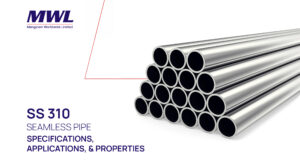
Among all pipe types, seamless pipes are considered the benchmark for strength and pressure resistance. These pipes are manufactured without welds, resulting in uniformity throughout their structure.
Key Features
- Excellent pressure-bearing capability
- Superior corrosion resistance
- No weld seams, reducing failure points
Industrial Applications
Seamless pipes are extensively used in:
- High-pressure steam lines
- Petrochemical transportation
- Heat exchangers
- Hydraulic systems
- Oil and gas refineries
Their ability to retain strength under thermal and mechanical stress makes them a preferred choice for critical operations.
2. Welded Stainless Steel Pipes
Welded pipes are manufactured by forming stainless steel strips into cylindrical shapes and welding the edges under inert gas atmosphere of argon near the welding area. They offer greater flexibility in size availability and are suitable for medium-pressure systems.
Key Features
- Cost-effective for large installations
- Uniform wall thickness
- Suitable for structural and process applications
Industrial Applications
Common uses include:
- Water distribution networks
- HVAC systems
- Food and beverage process lines
- Architectural tubing
- Chemical transfer systems
The smooth interior surface supports efficient fluid flow, making welded pipes reliable for continuous transport operations.
3. ERW (Electric Resistance Welded) Pipes
ERW pipes are produced by rolling stainless steel strips and welding them using electric resistance heat, along with inert gas atmosphere of argon near the welding area. Their manufacturing process provides dimensional accuracy and a refined surface finish.
Key Features
- Tight tolerances
- Strong weld integrity
- Ideal for lighter industrial loads
Industrial Applications
ERW pipes are widely used in:
- Automotive components
- Furniture frameworks
- General engineering
- Low to medium-pressure fluid systems
These pipelines offer an efficient balance between performance and cost, making them practical for large-scale fabrication.
4. EFW (Electric Fusion Welded) Pipes
These pipes are created by fusing the steel plate edges using high-heat electric current, along with inert gas atmosphere of argon near the welding area. Compared to other stainless steel pipe types, EFW pipes are designed for high-temperature or corrosive environments.
Key Features
- Strong, high-quality weld
- Suitable for large-diameter requirements
- Enhanced corrosion resistance
Industrial Applications
EFW pipes support:
- Offshore structures
- Chemical processing units
- High-temperature exhaust systems
Their reliability under aggressive working conditions ensures operational safety in demanding environments.
5. U-Tube Stainless Steel Pipes
U-tubes are specialized stainless steel pipes bent into a U shape for thermal transfer applications.
Key Features
- Designed for heat exchangers
- Strong resistance to thermal expansion
- Maintains consistent flow rate
Industrial Applications
These pipes are widely used in:
- Condensers
- Boiler systems
- HVAC chillers
- Power generation equipment
Their geometry maximizes contact surface for efficient heating or cooling cycles.
6. Hollow Sections and Structural Pipes
Although often categorized separately, hollow sections are essential for structural frameworks.
Key Features
- High load-bearing capacity
- Excellent dimensional stability
- Suitable for both circular and square sections
Industrial Applications
Used extensively in:
- Structural supports
- Fabrication assemblies
- Machinery frames
- Construction systems
These pipe types provide mechanical stability for architectural and industrial structures.
Where Different Stainless Steel Pipe Types Deliver the Most Value
The choice among various types of SS pipes depends on:
Operating Conditions
- Temperature
- Pressure
- Fluid type
- Corrosive exposure
Mechanical Requirements
- Load-bearing needs
- Dimensional accuracy
- Flow rate stability
Industry-Specific Compliance
Pharmaceutical, food, and petrochemical sectors require materials that comply with strict hygiene and safety standards – which stainless steel naturally supports.
Mangalam Worldwide manufactures stainless steel pipes that align with these demands, using controlled production, precision finishing, and strict testing protocols. Their stainless steel products are engineered to deliver long-term performance across a wide range of SS pipe applications, from fluid handling to structural engineering.
Conclusion
Choosing the right stainless steel pipe is essential for ensuring safety, efficiency, and durability in industrial operations. Whether the requirement is for high-pressure seamless pipes, versatile welded pipes, precision-engineered ERW tubes, or specialized U-tubes, each category brings a distinct advantage to the system it supports. The diversity of stainless steel pipe types enables industries to design piping systems that meet precise operational needs while maintaining a high degree of reliability.