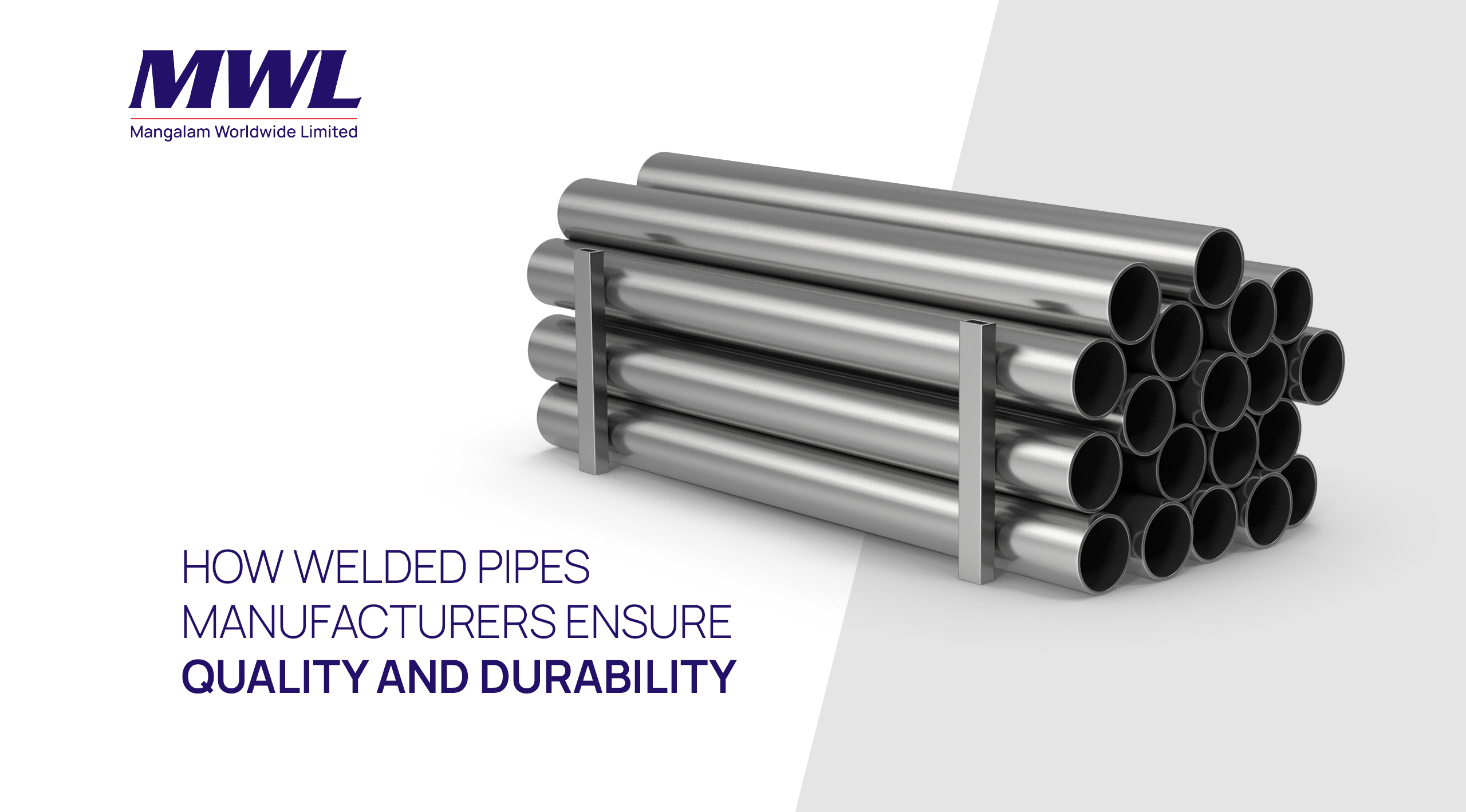
In industrial infrastructure, pipelines are more than just conduits. They are critical systems responsible for transporting fluids, gases, and structural loads under varying operational conditions. Whether used in construction, process industries, or engineering applications, the reliability of pipes depends heavily on how they are manufactured and tested. This is where experienced welded pipes manufacturers play a crucial role in ensuring both quality and long-term durability.
With increasing demand across sectors in India, manufacturers are expected to meet stringent performance benchmarks while maintaining consistency across production batches. Understanding how this is achieved requires a closer look at the welded pipe manufacturing process, material selection, and quality control practices.
Understanding the Welded Pipe Manufacturing Process
The welded pipe manufacturing process involves forming flat metal strips or coils into cylindrical shapes and joining the edges through welding techniques. Among the most widely used methods is Electric Resistance Welding, which is commonly adopted by ERW pipes manufacturers India.
Step 1: Raw Material Selection
The process begins with selecting high-quality steel coils. The chemical composition and mechanical properties of the raw material directly influence the final pipe performance.
Step 2: Forming
The steel strip is gradually shaped into a tubular form using a series of rollers. Precision in this stage ensures uniform diameter and wall thickness.
Step 3: Welding
The edges are heated and fused together using electrical resistance. This creates a continuous weld seam without the need for additional filler material, resulting in a clean and strong joint.
Step 4: Sizing and Shaping
Post-welding, the pipe is passed through sizing rolls to achieve exact dimensions and roundness.
Step 5: Heat Treatment
To relieve internal stresses created during welding, pipes may undergo heat treatment, improving their structural integrity.
Step 6: Finishing
Surface finishing processes such as straightening, cutting, and polishing are carried out to meet application-specific requirements.
Material Selection and Its Impact on Durability
Material choice is a defining factor in determining the lifespan and performance of welded pipes.
1. MS Welded Pipes:
MS welded pipes India are commonly used in construction, water pipelines, and structural applications. Mild steel offers good strength and weldability, making it suitable for general-purpose use.
2. Stainless Steel Welded Pipes:
For environments involving moisture, chemicals, or temperature variations, stainless steel welded pipes provide enhanced resistance to corrosion and oxidation. These are preferred in sectors such as food processing, pharmaceuticals, and chemical handling systems.
Selecting the appropriate material ensures that the pipe performs efficiently under specific operating conditions without premature degradation.
Key Quality Control Measures Followed by Manufacturers
Leading welded pipes manufacturers implement rigorous inspection and testing protocols to maintain product reliability. These measures are aligned with recognized pipe durability standards and industry specifications.
1. Non-Destructive Testing
Techniques such as ultrasonic testing and eddy current inspection are used to detect internal flaws in the weld seam without damaging the pipe.
2. Hydrostatic Testing
Pipes are subjected to internal pressure to verify their ability to withstand operational loads without leakage or deformation.
3. Dimensional Inspection
Precise measurement tools ensure that diameter, wall thickness, and length meet specified tolerances.
4. Weld Integrity Checks
The strength and uniformity of the weld seam are evaluated to ensure it matches or exceeds the base material strength.
5. Surface Quality Assessment
Inspection of surface finish helps identify defects such as cracks, scaling, or inconsistencies that could affect performance.
Role of Standards in Ensuring Pipe Durability
Compliance with pipe durability standards is essential for ensuring consistent performance across applications. These standards define parameters related to:
- Mechanical strength and load-bearing capacity
- Pressure resistance and leak-proof performance
- Chemical and environmental resistance
- Dimensional accuracy and tolerances
Adhering to these standards allows manufacturers to deliver pipes that can perform reliably across varied industrial conditions.
How Indian Manufacturers Maintain Consistency
The growth of industrial infrastructure has led to significant advancements among ERW pipes manufacturers India. Modern facilities are equipped with automated production lines, real-time monitoring systems, and advanced testing equipment.
Consistency is achieved through:
- Controlled production environments
- Standardized operating procedures
- Batch-wise traceability of raw materials
- Continuous process monitoring to detect variations
Such practices ensure uniformity across large production volumes, which is essential for projects requiring bulk supply.
Mangalam Worldwide’s Manufacturing Approach
Mangalam Worldwide focuses on delivering high-quality stainless steel welded pipes and engineered pipe solutions aligned with industrial requirements. The company integrates controlled manufacturing processes with stringent quality checks to ensure that every pipe meets defined specifications.
By emphasizing precision during forming, welding, and finishing stages, Mangalam ensures that the final product offers structural stability and resistance to operational stress. Their approach also includes comprehensive inspection protocols that validate weld strength, dimensional accuracy, and surface quality.
This systematic manufacturing framework allows Mangalam Worldwide to support industries that rely on dependable piping systems for critical operations.
Choosing the Right Welded Pipe Manufacturer
Selecting the right supplier is essential for ensuring long-term performance. Key considerations include:
- Proven expertise in the welded pipe manufacturing process
- Availability of multiple material options including MS and stainless steel
- Compliance with relevant pipe durability standards
- Robust quality testing infrastructure
- Ability to maintain consistency across production batches
Evaluating these factors helps in sourcing pipes that meet both technical and operational requirements.
Conclusion
The durability of welded pipes is not determined by a single factor but by a combination of material quality, manufacturing precision, and adherence to standards. Reputed welded pipes manufacturers ensure that each stage of production is carefully controlled to deliver pipes that perform reliably under demanding conditions.
With evolving industrial requirements, manufacturers like Mangalam Worldwide continue to refine their processes, offering solutions that balance strength, consistency, and long-term performance.