The global steel industry is about to enter an essential phase that will be influenced by changing demand patterns, technical advancements, and regulatory pressure. Steel Industry Trends 2026 indicate a transition toward cleaner production, digitally enabled operations, and more responsive supply chains. For manufacturers, contractors, and project stakeholders, understanding the future of steel industry dynamics is critical to staying competitive and compliant.
Evolving Demand and Market Direction
The steel industry growth 2026 outlook is being driven by infrastructure expansion, renewable energy projects, urbanization, and manufacturing recovery across key economies. In India, policy support and capital investment continue to accelerate capacity expansion and modernization.
The Indian steel industry future is closely linked to large-scale infrastructure initiatives, including transport corridors, energy projects, and industrial zones. These developments require consistent supply, higher-grade materials, and improved production efficiency. As demand becomes more specialized, manufacturers are expected to deliver not just volume, but precision and performance reliability.
Sustainability as a Core Industry Shift
Environmental accountability is no longer optional. Sustainable steel manufacturing is becoming a central requirement as industries align with carbon reduction targets and stricter compliance frameworks.
Key sustainability-driven developments include:
- Low-Carbon Production Methods: Steel producers are investing in alternative processes such as electric arc furnaces (EAF) and hydrogen-based reduction technologies. These methods significantly reduce greenhouse gas emissions compared to traditional blast furnace routes.
- Resource Efficiency and Recycling: Scrap-based steel production is gaining traction, supporting circular manufacturing models. Efficient resource utilization reduces dependency on raw materials and lowers environmental impact.
- Energy Optimization: Advanced monitoring systems are being implemented to track and reduce energy consumption during production stages.
These shifts are redefining the future of steel industry operations, pushing manufacturers to balance output with environmental responsibility.
Rise of Smart Steel Manufacturing
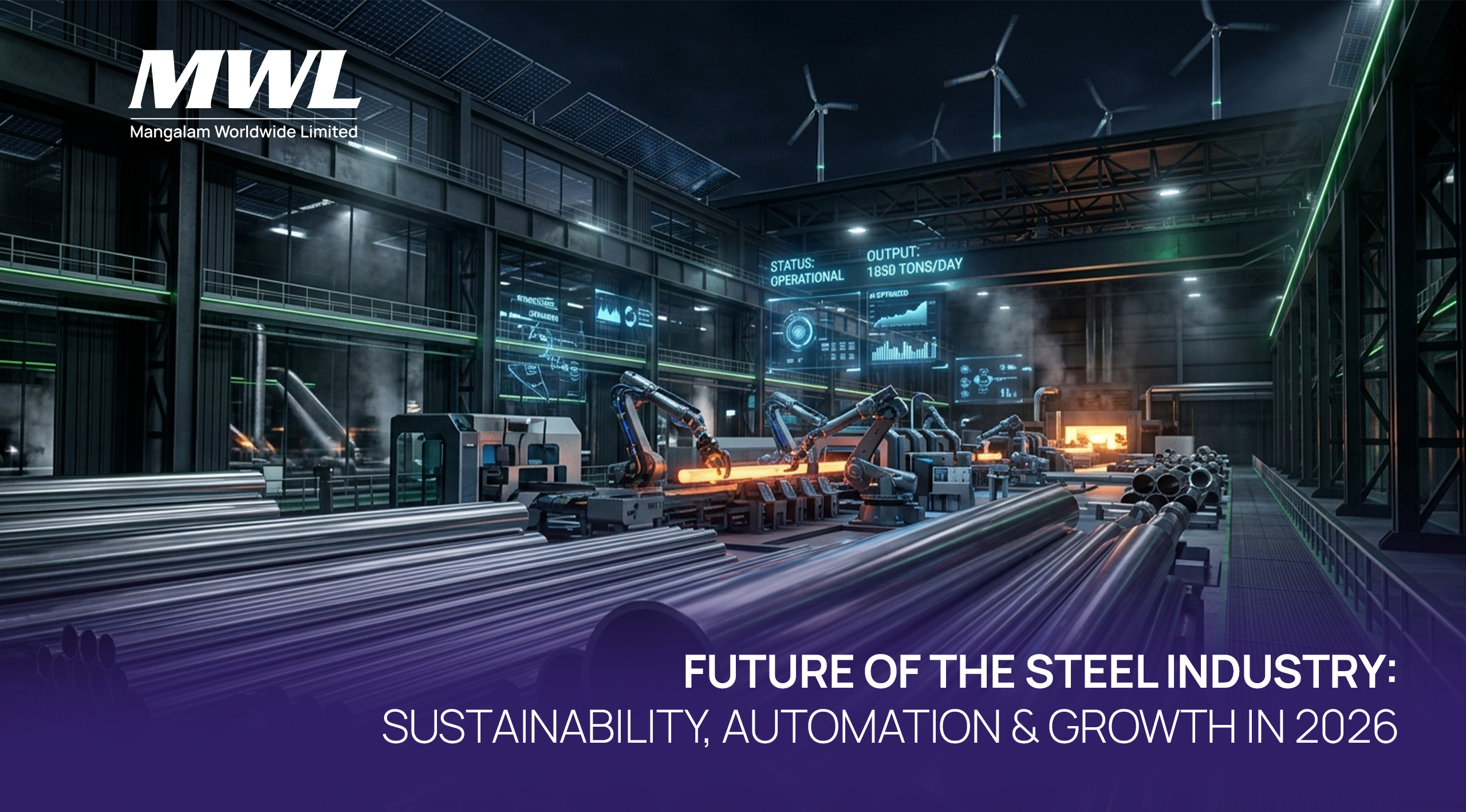
Automation and digital integration are transforming conventional production models. Smart steel manufacturing combines data-driven systems with advanced machinery to improve efficiency, quality, and traceability.
- Automation in Production Lines: Robotics and automated handling systems reduce manual intervention, ensuring consistency in processing and minimizing operational errors.
- Real-Time Monitoring and Analytics: Sensors and IoT-enabled systems allow manufacturers to track parameters such as temperature, pressure, and material composition in real time. This improves quality control and reduces waste.
- Predictive Maintenance: AI-driven maintenance systems analyze equipment performance to prevent breakdowns and reduce downtime.
- Digital Supply Chain Integration: Smart logistics and inventory management systems improve delivery timelines and reduce supply chain disruptions.
These advancements are central to Steel Industry Trends 2026, enabling manufacturers to operate with greater precision and responsiveness.
Quality Expectations and Material Performance
As industries demand higher efficiency and durability, material specifications are becoming more stringent. Customers are no longer focused solely on cost but on long-term performance, consistency, and compliance.
Manufacturers are expected to provide:
- Uniform mechanical properties across batches
- Tight control over chemical composition
- Improved dimensional accuracy
- Traceability of production processes
Meeting these expectations requires investment in advanced manufacturing systems and robust quality assurance frameworks.
Challenges Shaping Industry Transformation
Despite strong growth prospects, the industry faces structural challenges that influence the steel industry growth 2026 trajectory:
- Volatility in raw material prices, including iron ore and energy inputs
- Regulatory pressure related to emissions and environmental compliance
- Supply chain disruptions affecting global trade flows
- Technological transition costs, especially for smaller manufacturers
Addressing these challenges requires a strategic shift toward efficiency, innovation, and long-term planning.
Mangalam Worldwide: Aligning with Future-Ready Steel Manufacturing
As the industry evolves, Mangalam Worldwide continues to align its operations with emerging trends in sustainability, automation, and quality-driven production.
The company’s approach reflects the direction outlined in Steel Industry Trends 2026, with a focus on delivering reliable stainless-steel solutions that meet modern industrial requirements.
Key Strength Areas:
- Advanced Manufacturing Practices: Mangalam Worldwide integrates process control systems that support consistent output and adherence to defined specifications. This ensures reliability across critical applications.
- Quality-Focused Production: Every product is manufactured under stringent quality checks, ensuring compliance with industry standards and performance expectations.
- Adaptability to Market Needs: With the increasing complexity of industrial requirements, the company provides steel solutions aligned with specific applications, supporting sectors such as infrastructure, engineering, and manufacturing.
- Commitment to Efficiency and Responsibility: By adopting efficient production practices and optimizing resource utilization, Mangalam Worldwide contributes to the broader shift toward sustainable steel manufacturing.
Strategic Outlook for 2026 and Beyond
The future of steel industry will be defined by the ability to integrate sustainability with productivity. Manufacturers that invest in cleaner technologies, digital infrastructure, and quality assurance will be better positioned to meet evolving market demands.
The Indian steel industry future holds strong growth potential, supported by domestic demand and global competitiveness. However, success will depend on how effectively companies adapt to regulatory changes, technological advancements, and customer expectations.
Conclusion
Steel Industry Trends 2026 clearly indicate a transformation driven by sustainability, automation, and precision manufacturing. From smart steel manufacturing to environmentally responsible production, the industry is moving toward a more efficient and accountable model.
For businesses relying on high-performance steel, partnering with a manufacturer that understands these shifts is essential. With its focus on quality, process control, and forward-looking practices, Mangalam Worldwide continues to deliver solutions aligned with the evolving demands of the global steel industry.