Industrial equipment operating around chlorides, corrosive process fluids, high pressure or demanding mechanical loads needs more than conventional material performance. Premature corrosion, cracking, or loss of structural integrity can increase maintenance requirements and disrupt operations. This is where duplex stainless steel offers a distinct combination of properties.
Unlike stainless steels with a predominantly austenitic or ferritic structure, duplex grades have a mixed ferritic-austenitic microstructure. This structure gives duplex steel an effective balance of mechanical strength and corrosion resistance, making material selection particularly relevant for equipment exposed to aggressive service conditions.
What Makes Duplex Stainless Steel Different?
The microstructure of duplex stainless steel typically contains approximately equal proportions of ferrite and austenite. Its alloy chemistry generally includes chromium, nickel, and nitrogen, while many grades also contain molybdenum to enhance resistance to localized corrosion.
The resulting combination provides several important duplex stainless steel benefits:
- High mechanical and yield strength
- Good resistance to general and localised corrosion
- Improved resistance to chloride-induced damage
- High resistance to stress corrosion cracking
- Potential for reduced section thickness in strength-controlled designs
- Suitability for pressure-bearing and structurally demanding components
These characteristics explain why engineers consider duplex stainless steel for industrial applications where both corrosion performance and load-bearing capability matter.
High Strength for Mechanically Demanding Components
One of the key advantages is duplex stainless steel strength. Standard duplex grade 2205, for example, can provide yield strength more than twice that of Type 316 stainless steel.
Higher strength can give designers greater flexibility when engineering pressure vessels, process piping, tanks and structural components. Where the applicable design code and service conditions permit, thinner sections may also be possible, helping reduce material weight without compromising the required mechanical performance.
This strength becomes particularly valuable when equipment must withstand a combination of internal pressure, mechanical loading and corrosive exposure.
Better Performance in Chloride-Containing Conditions
Chlorides create a significant material-selection challenge because they can contribute to pitting, crevice corrosion and chloride-induced stress corrosion cracking.
The duplex stainless steel corrosion resistance comes partly from alloying elements such as chromium, molybdenum and nitrogen. Depending on the specific grade and environment, this chemistry can provide strong chloride corrosion resistance, making duplex grades suitable for applications involving saline water, process chemicals and other chloride-bearing media.
Grade selection still matters. Temperature, chloride concentration, pH, operating stress and other process conditions must be considered rather than assuming every duplex grade will perform equally in a particular environment.
Resistance to Stress Corrosion Cracking
Stress corrosion cracking can develop when tensile stress and a susceptible corrosive environment act together. Chloride-containing environments are especially relevant to stainless steel selection, particularly at higher temperatures.
Duplex grades generally resist chloride-induced stress corrosion cracking better than standard austenitic stainless steels.
For process equipment, piping, and components subjected to both mechanical stress and corrosive media, this characteristic can support longer-term reliability when the appropriate duplex grade, fabrication procedure, and operating limits are selected.
Key Duplex Stainless Steel Applications
The combination of corrosion resistance and mechanical strength creates several important duplex stainless steel applications.
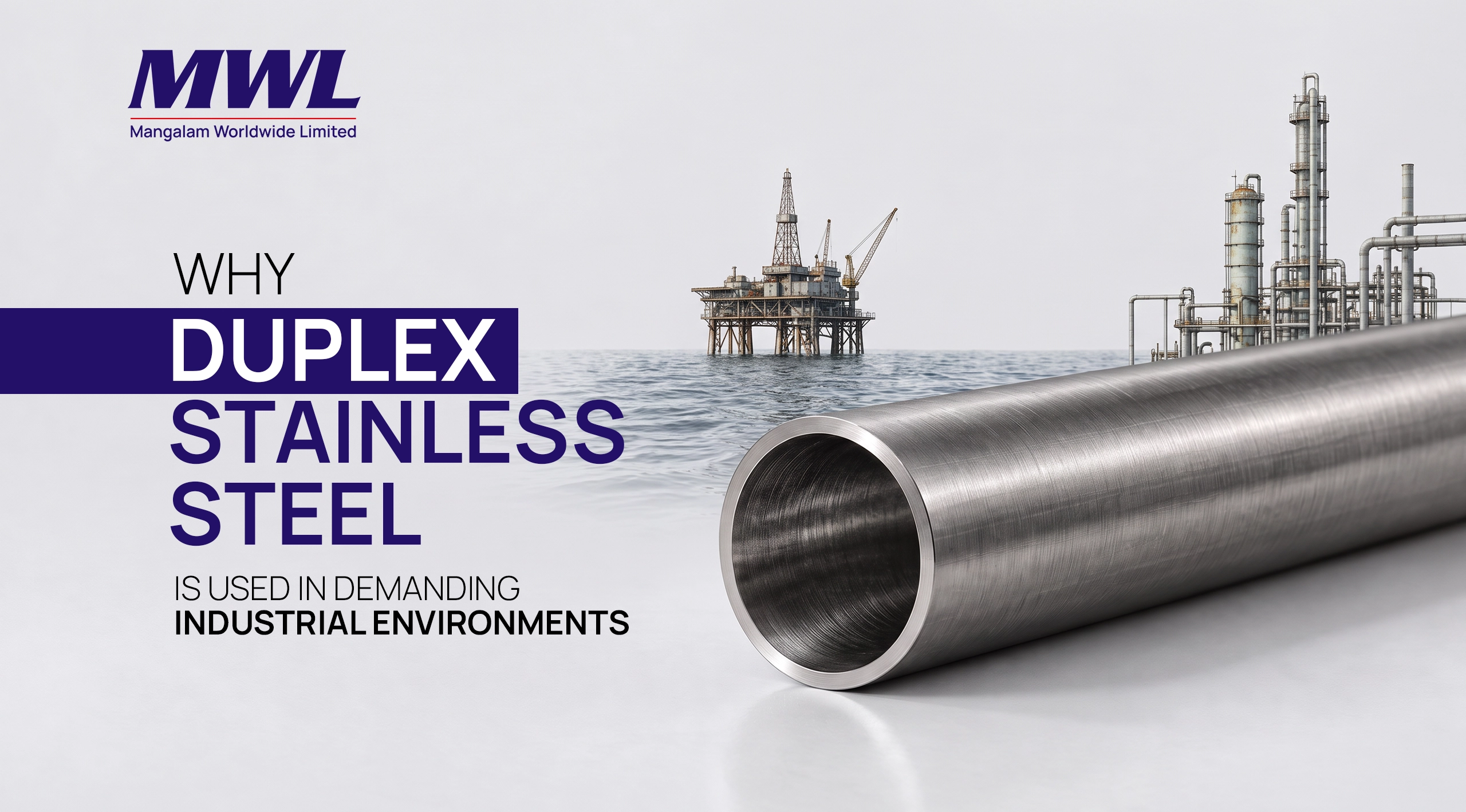
- Oil and gas: Duplex grades are specified for components such as process piping, tubes, valves, flanges and other equipment exposed to demanding process conditions.
- Chemical processing: Tanks, piping systems and pressure vessels can benefit from the material’s strength and resistance to various corrosive environments.
- Desalination and water systems: Chloride-bearing water makes material selection critical. Higher-alloyed duplex grades are particularly relevant to demanding desalination and seawater service.
- Pulp and paper: Process tanks, digesters and other equipment can encounter corrosive chemicals alongside mechanical and thermal demands.
The actual grade should always be matched to the service environment rather than selected solely by application category.
Selecting Duplex Stainless Steel for Demanding Requirements
A successful specification starts with understanding the operating environment. Buyers and engineers should evaluate chloride concentration, temperature, pressure, required mechanical properties, fabrication requirements, and applicable standards before finalizing the grade.
Manufacturing control is equally important because duplex performance depends on achieving the required chemistry and microstructural balance.
Mangalam Worldwide operates a fully integrated specialty stainless steel mill with an in-house melting shop and offers Austenitic, Ferritic, Martensitic, Duplex, and High Alloy stainless steel grades. Its manufacturing setup includes an Electric Induction Furnace with an AOD Converter for controlled chemistry, while its hot piercing capabilities support production in Duplex grades.
Conclusion
Demanding service conditions require material selection based on the actual combination of corrosion exposure, mechanical loading, and operating conditions. Duplex stainless steel addresses these requirements through high strength, strong corrosion performance, and enhanced resistance to stress corrosion cracking.
For customers evaluating duplex stainless steel for critical applications, Mangalam Worldwide combines integrated manufacturing capabilities with controlled chemistry and stainless steel expertise to support demanding specifications and application requirements.
Source the Right Duplex Stainless Steel for Your Application
Need duplex stainless steel that meets demanding corrosion, strength, and application requirements?
Share your grade, size, specification, and quantity requirements with Mangalam Worldwide. Our team can help you identify the appropriate stainless steel solution for your industrial application.
Send your enquiry to Mangalam Worldwide today and discuss your duplex stainless steel requirements with our team.