When stainless steel is installed in critical applications, its journey should not end at delivery. Engineers, project owners, and procurement teams increasingly expect every component to be backed by documented proof of its origin, composition, and quality. Whether the material is used in process plants, food manufacturing, pharmaceuticals, infrastructure, or oil and gas facilities, the ability to verify exactly what has been installed is no longer optional but it is an important part of quality control.
This is where stainless steel traceability becomes essential. It enables manufacturers and end users to track a material from its production stage to its final installation, helping ensure compliance, accountability, and long-term reliability.
What Is Stainless Steel Traceability?
Stainless steel traceability is the process of maintaining documented records that identify a stainless steel product throughout its manufacturing and supply chain. Every batch of material is linked to unique identifiers that allow buyers to verify where it came from, how it was manufactured, and whether it meets the required specifications.
Instead of relying solely on labels or supplier declarations, traceability provides documented evidence that supports quality and material authenticity.
For industries operating under strict quality standards, stainless steel material traceability helps eliminate uncertainty during procurement, fabrication, installation, and maintenance.
Why Traceability Matters
Traceability is about far more than record-keeping. It protects projects from quality risks that may not become visible until equipment is already in service.
Key benefits include:
- Verification of material grade and specifications
- Improved quality control during fabrication
- Faster identification of affected materials if issues arise
- Better compliance with customer and industry requirements
- Greater confidence in long-term equipment performance
For projects involving pressure systems, corrosive environments, or elevated temperatures, documented traceability provides valuable assurance that the correct material has been installed.
The Role of Heat Number Traceability
One of the most important elements of traceability is heat number traceability.
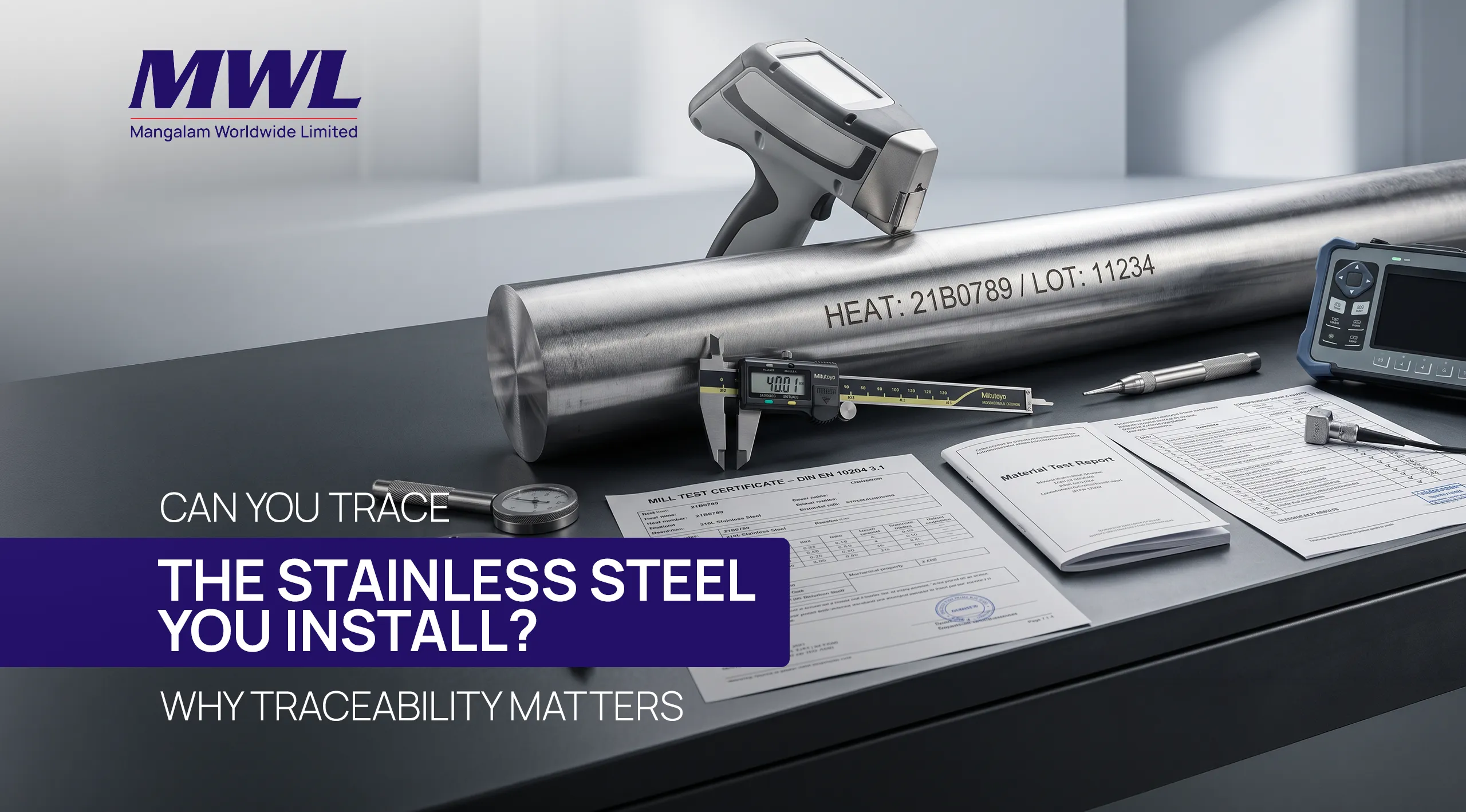
A heat number is a unique identification assigned to a specific batch of steel produced during melting. This number remains associated with the material throughout manufacturing and is typically marked on the product or recorded in supporting documentation.
By matching the heat number with production records, buyers can verify:
- Chemical composition
- Mechanical properties
- Manufacturing batch
- Inspection records
- Testing results
This allows every supplied product to be traced back to its original production lot, creating a reliable chain of quality documentation.
Understanding the Mill Test Certificate
A critical document supporting traceability is the mill test certificate.
Also known as an MTC, this certificate provides technical information confirming that the supplied stainless steel complies with specified standards and customer requirements.
A typical MTC for stainless steel includes:
- Material grade
- Heat number
- Chemical composition
- Mechanical test results
- Applicable manufacturing standards
- Inspection details
- Manufacturer identification
Rather than relying on assumptions, buyers can review documented test data before accepting or installing the material.
Why Material Traceability Supports Quality Assurance
Effective stainless steel quality assurance depends on having reliable documentation throughout the manufacturing process.
Traceability supports quality assurance by enabling manufacturers to:
- Verify raw material sources
- Monitor production consistency
- Record inspection results
- Maintain batch identification
- Validate compliance before shipment
For buyers, this documentation simplifies supplier audits, customer inspections, and project acceptance procedures while reducing the risk of non-conforming materials entering production.
Industries Where Traceability Is Essential
Although traceability adds value across every sector, it becomes particularly important where safety, regulatory compliance, and operational reliability are priorities.
Industries that commonly require stainless steel material traceability include:
- Oil and gas
- Petrochemical processing
- Pharmaceutical manufacturing
- Food and beverage processing
- Chemical plants
- Power generation
- Water treatment facilities
- Infrastructure and construction
- Engineering and process equipment manufacturing
In these industries, documented material verification often forms part of contractual quality requirements.
Questions Buyers Should Ask Before Purchasing
Before selecting a stainless steel supplier, procurement teams should evaluate whether the company can provide complete traceability documentation.
Useful questions include:
- Can every product be linked to its production batch?
- Is a mill test certificate supplied with each order where required?
- Are heat numbers permanently identified on the material?
- Can inspection records be provided upon request?
- Does the supplier follow documented quality assurance procedures?
These questions help buyers identify suppliers committed to transparency and consistent manufacturing standards.
Mangalam Worldwide’s Commitment to Traceable Quality
At Mangalam Worldwide, quality extends beyond manufacturing. Every product is produced with rigorous process control and documentation practices designed to support dependable stainless steel traceability.
The company’s quality systems focus on maintaining accurate production records, comprehensive inspections, and complete documentation, allowing customers to receive traceable stainless steel products that meet demanding industrial requirements.
By providing relevant documentation, including the MTC for stainless steel where applicable, Mangalam Worldwide helps customers simplify quality verification, maintain compliance, and build confidence throughout their supply chain.
Conclusion
In today’s industrial environment, knowing exactly what material has been installed is just as important as selecting the correct grade. Stainless steel traceability provides the transparency needed to verify material quality, simplify inspections, and support long-term operational reliability.
From heat number traceability to a detailed mill test certificate, every document contributes to stronger stainless steel quality assurance and more informed procurement decisions.
By partnering with a trusted manufacturer like Mangalam Worldwide, businesses gain access to high-quality, traceable stainless steel products supported by reliable documentation and consistent manufacturing practices, along with continuous data analysis & technical improvements.