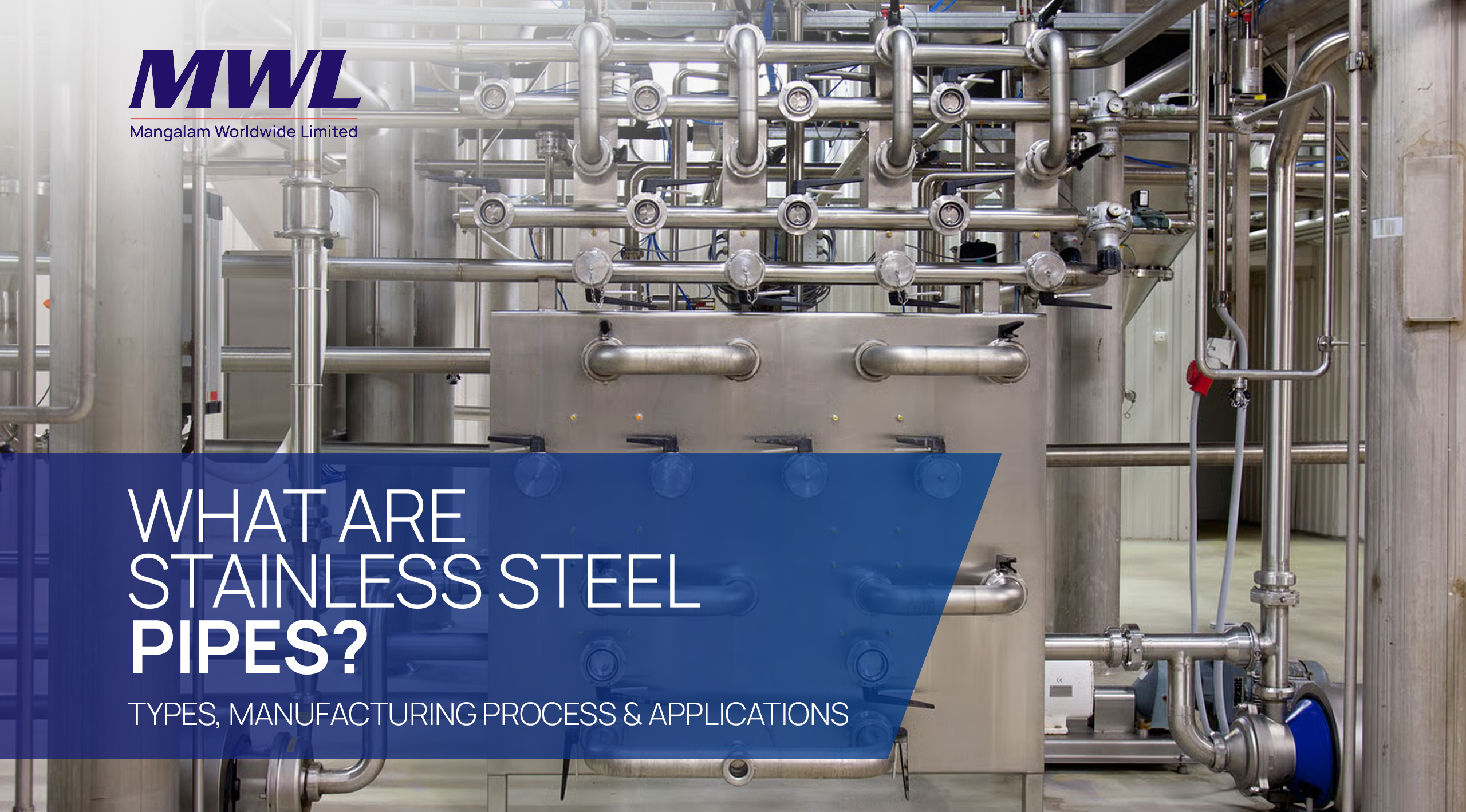
From fluid transportation systems and processing plants to structural frameworks and specialised engineering equipment, Stainless Steel Pipes are a critical component in modern industrial operations. Their combination of corrosion resistance, strength, durability, and versatility makes them suitable for environments where conventional materials may struggle to perform reliably.
Understanding the different pipe types, production methods, and application requirements helps buyers and project engineers select the right product for long-term performance and operational efficiency.
What Are Stainless Steel Pipes?
Stainless Steel Pipes are hollow cylindrical products manufactured from stainless steel alloys containing chromium and other alloying elements that enhance corrosion resistance and mechanical strength. These pipes are designed to transport liquids, gases, and chemicals or serve structural and mechanical functions in industrial environments.
The choice of stainless steel pipe depends on factors such as operating pressure, temperature, corrosion exposure, and fabrication requirements. Modern industries rely on stainless steel pipes because they offer a balance of performance, longevity, and maintenance efficiency.
Types of Stainless Steel Pipes
Understanding the major types of stainless steel pipes is essential when selecting materials for industrial projects.
Seamless Stainless Steel Pipes:
Seamless stainless steel pipes are manufactured without a welded joint. They are produced from solid billets that are heated and pierced to create a hollow tube structure.
Key advantages include:
- Uniform strength throughout the pipe wall
- Higher pressure-handling capability
- Enhanced reliability in critical applications
- Better performance under extreme temperatures
Seamless pipes are commonly selected for oil and gas systems, power plants, chemical processing facilities, and high-pressure industrial operations.
Welded Stainless Steel Pipes:
Welded stainless steel pipes are produced by forming stainless steel strips or coils into a cylindrical shape and welding the seam longitudinally.
Benefits include:
- Cost-effective production
- Availability in larger diameters
- Consistent dimensional accuracy
- Suitable for a wide range of industrial applications
Advances in welding technology have significantly improved weld integrity, making welded pipes a dependable option for many process and structural applications.
Understanding the Stainless Steel Pipe Manufacturing Process
The stainless steel pipe manufacturing process varies depending on whether the pipe is seamless or welded, but both methods focus on achieving dimensional precision, mechanical performance, and quality consistency.
Manufacturing Seamless Pipes:
The process typically includes:
- Billet Preparation: High-quality stainless steel billets are selected and heated to suitable temperatures for forming.
- Piercing: A rotary piercing operation creates a hollow centre within the solid billet.
- Elongation and Rolling: The hollow shell is elongated and rolled to achieve the desired diameter and wall thickness.
- Heat Treatment: Controlled heat treatment enhances metallurgical properties and ensures uniform performance.
- Finishing and Inspection: The pipe undergoes straightening, surface finishing, dimensional verification, and quality testing before dispatch.
Manufacturing Welded Pipes:
For welded pipe production, the process includes:
- Coil Selection: Stainless steel coils are chosen according to required grades and specifications.
- Forming: The coil is progressively shaped into a tubular profile.
- Welding: Advanced welding techniques join the edges to create a continuous pipe.
- Heat Treatment and Calibration: Post-weld treatments improve structural integrity while calibration ensures dimensional accuracy.
- Testing and Quality Assurance: Each pipe is inspected for weld quality, surface condition, and compliance with applicable standards.
Key Benefits of Industrial Stainless Steel Pipes
The demand for industrial stainless steel pipes continues to grow because they offer several operational advantages.
- Corrosion Resistance: Stainless steel forms a protective passive layer that resists rust, oxidation, and chemical attack. This makes it suitable for challenging operating environments.
- Strength and Durability: These pipes maintain structural integrity under demanding pressure, temperature, and mechanical loading conditions.
- Hygienic Performance: Smooth internal surfaces help minimise contamination risks, making stainless steel suitable for food processing, pharmaceutical manufacturing, and water treatment systems.
- Long Service Life: The durability of stainless steel often translates into reduced maintenance requirements and lower lifecycle costs.
- Fabrication Flexibility: Stainless steel pipes can be cut, welded, bent, and fabricated into customised systems without compromising performance.
SS Pipe Applications Across Industries
The versatility of stainless steel allows pipes to support a broad range of engineering and industrial functions. Common SS pipe applications include:
- Oil and Gas Infrastructure: Pipes are used for fluid transportation, processing equipment, and offshore installations where corrosion resistance is critical.
- Chemical Processing Plants: Chemical manufacturers require stainless steel piping systems capable of handling aggressive media and high-temperature processes.
- Water Treatment Facilities: Corrosion-resistant piping helps maintain system reliability in water distribution and treatment operations.
- Food and Beverage Manufacturing: Hygienic stainless steel piping supports product purity and compliance with industry standards.
- Power Generation: Power plants utilise stainless steel pipes in steam systems, heat exchangers, and process equipment.
Construction and Fabrication
Structural frameworks, handrails, support systems, and architectural components often incorporate stainless steel pipe products.
In addition to conventional piping systems, many engineering applications utilise stainless steel tubes for precision fluid handling and mechanical assemblies. These stainless steel tubing uses are particularly important in instrumentation systems, heat exchangers, automotive components, and specialised manufacturing equipment.
Choosing the Right Stainless Steel Pipe Manufacturer
The performance of any piping system depends significantly on manufacturing quality. A reliable stainless steel pipe manufacturer should offer:
- Consistent raw material quality
- Advanced production capabilities
- Comprehensive testing and inspection procedures
- Dimensional accuracy and product traceability
- Compliance with recognised industry standards
- Reliable supply for diverse industrial requirements
Working with an experienced manufacturer helps ensure product consistency and long-term operational performance.
Why Mangalam Worldwide?
Mangalam Worldwide has built a strong reputation for delivering high-quality stainless steel products designed for demanding industrial applications. With a focus on precision manufacturing, quality assurance, and customer-centric solutions, the company supplies stainless steel pipes that meet the requirements of infrastructure, engineering, process industries, and manufacturing sectors.
Its commitment to product excellence ensures that customers receive dependable solutions for both standard and specialised applications.
Conclusion
Stainless Steel Pipes remain one of the most important materials in industrial infrastructure due to their strength, corrosion resistance, versatility, and long service life. Whether selecting seamless stainless steel pipes for high-pressure environments or welded stainless steel pipes for cost-effective fabrication projects, understanding the manufacturing process and application requirements is essential.
By partnering with a trusted stainless steel pipe manufacturer such as Mangalam Worldwide, businesses can secure reliable piping solutions that support performance, efficiency, and operational reliability across a wide range of industries.