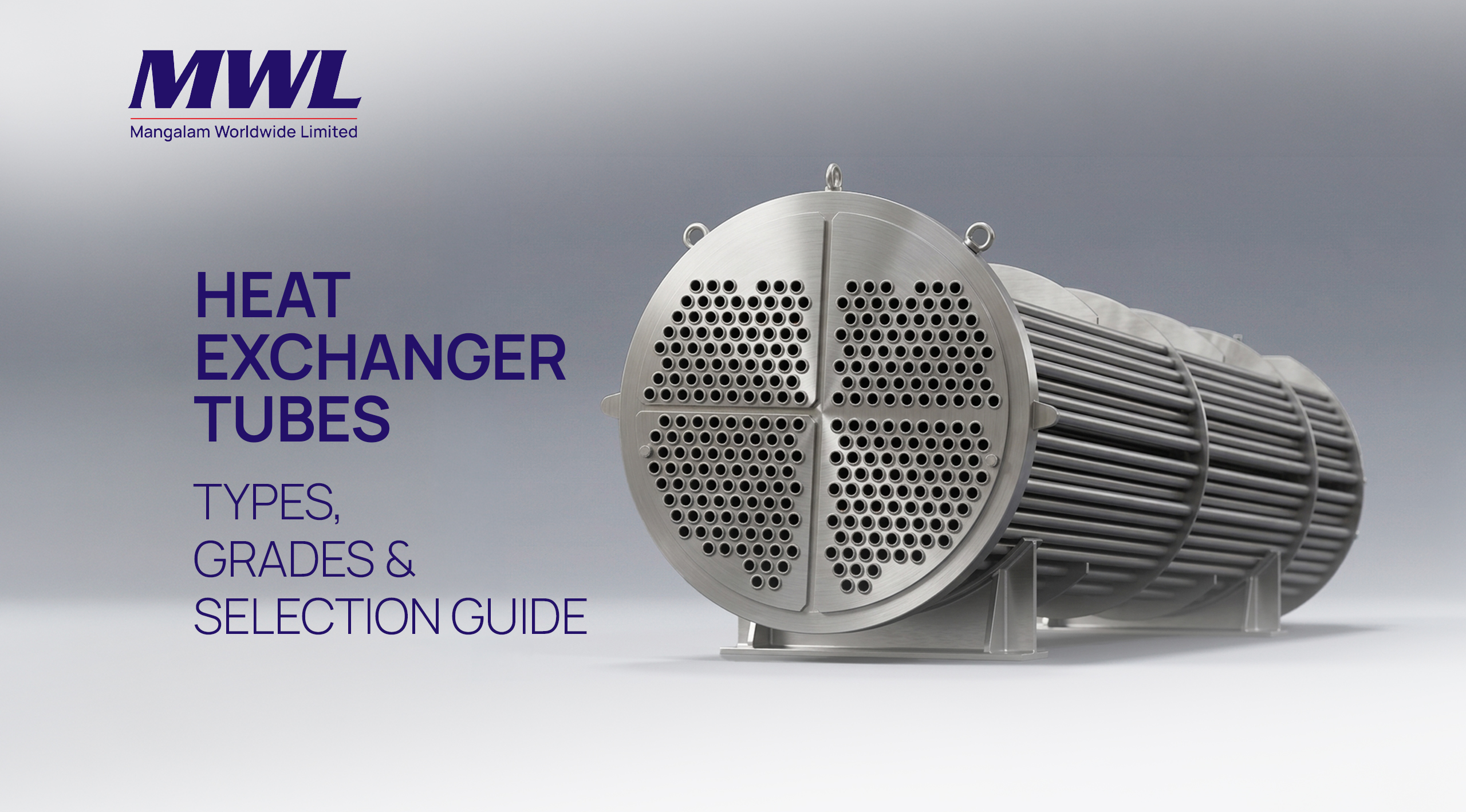
In thermal systems, performance stability depends heavily on component-level precision. Heat Exchanger Tubes are not just conduits for fluid flow; they directly influence heat transfer efficiency, pressure handling, and operational reliability. Whether used in process industries or energy systems, selecting the correct tube configuration and material grade is essential to ensure long-term system performance.
Why Tube Selection Matters in Heat Transfer Systems
A heat exchanger operates under continuous thermal cycles, pressure variations, and, in many cases, chemically active environments. Tubes serve as the interface where heat exchange occurs, making them critical to both efficiency and durability.
Incorrect selection can lead to:
- Reduced heat transfer efficiency due to fouling or scaling
- Material degradation from corrosion or thermal stress
- Increased maintenance frequency and operational downtime
This makes the understanding of heat exchanger tube types and material behaviour a fundamental requirement for engineers and procurement teams.
Functional Classification of Heat Exchanger Tube Types
Rather than viewing tubes as generic components, it is more practical to classify heat exchanger tube types based on their functional role within a system.
- Straight Tubes: Used in systems where ease of inspection and cleaning is a priority. These are common in large shell-and-tube exchangers where maintenance accessibility is critical.
- U-Bend Tubes: Designed to accommodate thermal expansion within compact systems. Their geometry reduces stress caused by temperature variation, making them suitable for high-temperature operations.
- Seamless Tubes: Manufactured without weld joints, these tubes provide superior structural integrity. They are preferred in high-pressure applications where reliability is critical.
- Welded Tubes: Produced through forming and welding processes, these offer cost efficiency and are suitable for controlled environments with moderate pressure requirements.
- Boiler and Heat Exchanger Tubes: Specifically engineered for high-temperature and high-pressure environments, boiler and heat exchanger tubes are widely used in power plants and industrial heating systems where thermal efficiency and safety are essential.
Material Selection and Heat Exchanger Tube Grades
Choosing the correct heat exchanger tube grades is a key factor in ensuring compatibility with operating conditions. The selection is typically based on temperature exposure, pressure levels, and the chemical nature of the working fluid.
- Carbon Steel Grades: Suitable for non-corrosive environments and moderate temperature applications. These are often specified for standard boiler systems where cost control is important.
- Alloy Steel Grades: Designed for elevated temperature service, alloy steels offer improved strength and resistance to thermal fatigue. These are used in demanding applications such as petrochemical processing.
- Stainless Steel Grades: Stainless steel heat exchanger tubes are widely used in environments where corrosion resistance is critical. Grades such as 304 and 316 provide strong resistance to oxidation and chemical exposure, making them suitable for chemical, marine, and process industries.
The correct grade selection ensures that tubes maintain performance consistency over extended operating cycles.
Key Properties That Influence Performance
Evaluating heat exchanger tube properties helps align material selection with system requirements.
- Thermal Conductivity: Affects the rate of heat transfer between fluids. Materials must balance conductivity with durability.
- Corrosion Resistance: Essential in applications involving aggressive media or moisture exposure. Stainless steel heat exchanger tubes are preferred in such environments.
- Mechanical Strength: Tubes must withstand internal pressure and external stresses without deformation.
- Surface Condition: Internal smoothness reduces fouling and improves flow efficiency, directly impacting system performance.
- Dimensional Accuracy: Precise tolerances ensure proper fitment and reduce the risk of leakage or assembly issues.
Application-Based Selection Approach
The application defines the performance expectations of Heat Exchanger Tubes more than any single property.
- Power Generation: Requires robust boiler and heat exchanger tubes capable of handling high pressure and temperature
- Chemical Processing: Demands corrosion-resistant materials such as stainless steel heat exchanger tubes
- Oil and Gas: Requires tubes that can handle pressure fluctuations and harsh environments
- HVAC Systems: Focuses on efficiency and compact design
Selecting tubes based on application ensures optimal performance and reduced lifecycle costs.
Common Industry Challenges
Despite the availability of multiple options, industries often face issues due to improper selection or inconsistent supply:
- Mismatch between material grade and operating environment
- Variability in dimensional accuracy affecting system assembly
- Premature corrosion or scaling due to incorrect material choice
- Supply inconsistencies impacting project timelines
These challenges highlight the importance of working with a technically capable heat exchanger tube manufacturer that can ensure quality and application alignment.
Mangalam Worldwide: Precision-Driven Tube Manufacturing
As a trusted Mangalam Worldwide, the company focuses on delivering high-performance tube solutions tailored to industrial heat transfer systems.
Mangalam Worldwide specialises in manufacturing stainless steel heat exchanger tubes that meet stringent quality and performance requirements across sectors.
Key Capabilities:
- Consistent Material Quality: Controlled production processes ensure uniform chemical composition and mechanical properties
- Wide Grade Availability: Supply of diverse heat exchanger tube grades aligned with specific industrial needs
- Dimensional Precision: Tight tolerance control for seamless integration into exchanger assemblies
- Application-Oriented Manufacturing: Products designed to perform in power, chemical, and engineering environments
By combining manufacturing precision with material expertise, Mangalam Worldwide supports reliable and efficient heat transfer operations.
Conclusion
Heat Exchanger Tubes play a decisive role in determining the efficiency and durability of thermal systems. Understanding heat exchanger tube types, selecting appropriate grades, and evaluating performance properties are critical steps in ensuring long-term operational success.
With increasing demand for reliability and precision, industries require dependable manufacturing partners. Mangalam Worldwide delivers solutions that align with these expectations, offering consistent quality and performance across diverse industrial applications.