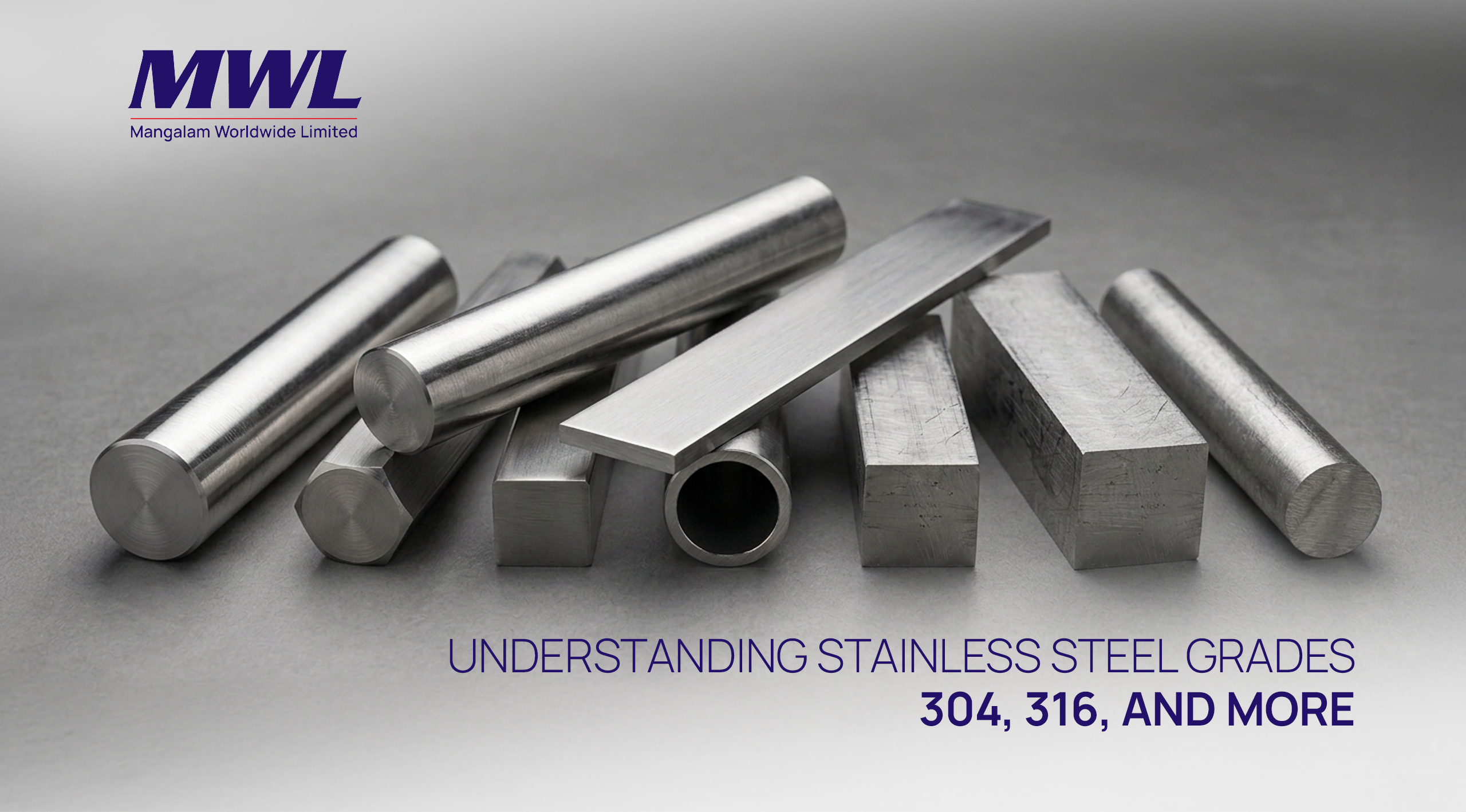
Stainless steel plays a critical role in modern engineering and manufacturing because of its durability, corrosion resistance, and adaptability to demanding environments. However, not all stainless steel performs the same way. Different stainless steel grades are designed with specific chemical compositions and mechanical characteristics to meet particular operational requirements.
For manufacturers, engineers, and procurement teams, understanding the differences between industrial stainless steel grades such as 304, 316, and others is essential for selecting materials that ensure reliability, performance, and long service life. By evaluating stainless steel properties like corrosion resistance, strength, and temperature tolerance, industries can choose the most suitable material for their applications.
What Defines Stainless Steel Grades?
Stainless steel grades are classifications based on the material’s chemical composition, microstructure, and performance characteristics. These grades typically contain chromium as the primary alloying element, which forms a protective oxide layer that helps resist corrosion.
Additional elements such as nickel, molybdenum, titanium, and manganese are introduced to enhance specific stainless steel properties, including strength, resistance to chemicals, and performance at elevated temperatures.
Different grades are grouped into families such as:
- Austenitic stainless steel
- Ferritic stainless steel
- Martensitic stainless steel
- Duplex stainless steel
Among these, austenitic grades are commonly specified in manufacturing environments because they combine strong corrosion resistance with good formability and weldability. Grades like 304 and 316 are prominent examples within this category.
Stainless Steel Grade 304: Reliable and Versatile
Grade 304 is one of the most recognized industrial stainless steel grades due to its balanced composition and dependable performance. It typically contains around 18% chromium and 8% nickel, which contribute to its corrosion resistance and structural stability.
Some key stainless steel properties associated with grade 304 include:
- Good resistance to oxidation and moisture exposure
- Excellent fabrication and welding capability
- Strong mechanical strength for structural components
- Hygienic surface characteristics suitable for food processing environments
Because of these characteristics, grade 304 is frequently selected for equipment used in food processing plants, architectural components, industrial storage tanks, and machinery parts that require reliable corrosion protection without exposure to highly aggressive chemicals.
Its adaptability makes it a practical choice for manufacturers seeking cost-effective stainless steel with dependable performance.
Stainless Steel Grade 316: Designed for Demanding Environments
Grade 316 stainless steel is engineered to perform in more chemically aggressive or moisture-intensive environments. The addition of molybdenum significantly enhances its resistance to corrosion caused by chlorides and industrial chemicals.
Important stainless steel properties of grade 316 include:
- Superior resistance to pitting and crevice corrosion
- Improved durability in marine or chemical processing environments
- High temperature stability
- Reliable performance in saline or acidic conditions
Because of these enhanced characteristics, grade 316 is often selected for applications such as marine hardware, pharmaceutical manufacturing equipment, chemical processing plants, and high-performance industrial components.
When operating conditions involve exposure to salts, chemicals, or corrosive liquids, grade 316 offers a more durable solution compared to many standard industrial stainless steel grades.
Other Important Industrial Stainless Steel Grades
While grades 304 and 316 receive significant attention, several other stainless steel grades are designed to address specialized industrial challenges.
Grade 321, for example, incorporates titanium to stabilize the material at elevated temperatures. This helps maintain structural integrity in environments where thermal stress could otherwise weaken standard stainless steel.
Similarly, duplex stainless steel grades combine the characteristics of both austenitic and ferritic structures. These materials provide enhanced strength and improved resistance to stress corrosion cracking, making them suitable for heavy-duty engineering and offshore applications.
By selecting the right grade, industries can optimize durability, safety, and operational efficiency.
How Stainless Steel Properties Influence Material Selection
Choosing the correct material requires evaluating multiple stainless steel properties rather than focusing on corrosion resistance alone. Engineers often consider factors such as:
- Mechanical strength and load-bearing capability
- Resistance to chemical exposure
- Temperature tolerance
- Fabrication and machining characteristics
- Long-term maintenance requirements
For example, processing equipment exposed to moisture may perform well with grade 304, while environments involving chemical exposure may require grade 316 or another specialized grade.
Understanding these differences allows manufacturers to make informed material decisions that support long-term reliability.
Mangalam Worldwide: Delivering Trusted Stainless Steel Solutions
Selecting the right industrial stainless steel grades is only part of the equation. Consistent material quality and reliable supply are equally important for manufacturers and engineering companies.
Mangalam Worldwide has established itself as a trusted name in the stainless steel industry by delivering high-quality stainless steel products designed to meet demanding industrial requirements. The company offers a comprehensive range of stainless steel materials that meet strict quality standards and support a variety of engineering applications.
With expertise in supplying precision stainless steel products, Mangalam Worldwide helps businesses access materials that provide dependable performance, dimensional accuracy, and long-term durability.
Conclusion
Understanding different stainless steel grades such as 304, 316, and other specialized alloys allows industries to select materials that align with their operational needs. By carefully evaluating stainless steel properties including corrosion resistance, strength, and environmental compatibility, manufacturers can ensure optimal performance and reliability.
As industries continue to demand durable materials for complex engineering challenges, choosing the right industrial stainless steel grades becomes a critical step in achieving efficiency, safety, and long-term success. Companies like Mangalam Worldwide support this process by providing premium stainless steel solutions that meet modern industrial standards.
Looking for reliable stainless steel solutions for your industrial applications?
Explore Mangalam Worldwide’s range of premium stainless steel products designed for strength, durability, and long-term performance.